
The ecological crisis, characterized by the destruction and subsequent collapse of mutually supportive ecospheres, forces mankind - as the perpetrator - to enter into a relationship with living nature that can minimize the worst consequences. Do we proceed a destructive, parasitic relation of exploitation, pollution and extinct of species? What is urgently needed is a completely new understanding of Life. Theory of biocommunication > is the first and only theory that integrates all domains of life empiristically in a non-reductionistic and non-mechanistic way. This theory of biocommunication strictly avoids metaphysical narratives (e.g., holism, mechanism, atomism) and opens a ground breaking understanding of life through analyses of sign-mediated interactions within and between cells, tissues, organs, and organisms in all domains of life. From 1987 to 1990 I developed a THEORY OF COMMUNICATIVE NATURE > Living Nature is structured and organised by language and communication within and among organisms. This means that besides human language and communication every organism within its population is competent to use signs with which organisms can differentiate between self and non-self and are able to exchange information concerning common coordinations and organisations of single and group behavior. These sign-mediated interactions we term biocommunication. The biocommunicative approach investigates both communication processes within and among cells, tissues, organs and organisms as sign-mediated interactions, and nucleotide sequences as code, i.e. language-like text, which follows in parallel three (3) kinds of rules: combinatorial (syntactic), context-sensitive (pragmatic) and content-specific (semantic). Natural genome editing from a biocommunicative perspective is competent agent-driven generation and integration of meaningful nucleotide sequences into pre-existing genomic content arrangements and the ability to (re-)combine and (re-)regulate them according to context-dependent (i.e. adaptational) purposes of the host organism Guenther Witzany > |
||
|
|
 |
|
|
|
|
|||||||||||||||||||||||
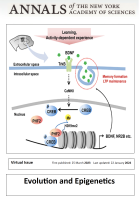
 Phages represent the most diverse inhabitants on this planet. Until today they are completely underestimated in their number, skills and competences and still remain the dark matter of biology
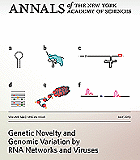 Genetic Novelty / Genomic Variations by RNA Networks and Viruses
 Memory and Learning in Plants
 Biocommunication of Ciliates
 Biocommunication of Animals
 Biocommunication of Fungi
 Viruses - Essential Agents of Life
 "Plants assess their surroundings, estimate how much energy they need for particular goals, and then realise the optimum variant. They take measures to control certain environmental resources. They perceive themselves and can distinguish between ‘self ’ and ‘non-self ’."


© kama 2008 | Legal | Login |